If you’ve ever received a message saying “What’s your ETA?” or “ETA 10 minutes,” you may have wondered about the ETA meaning in text. This short abbreviation is one of the most common terms used in texting, online chats, emails, and social media. Whether you’re talking to friends, family, coworkers, or delivery drivers, understanding ETA can help you communicate more clearly.
In this guide, you’ll learn what ETA means in text, how people use it, where it came from, examples of conversations, common mistakes, and other texting abbreviations you should know.
What Does ETA Mean in Text?
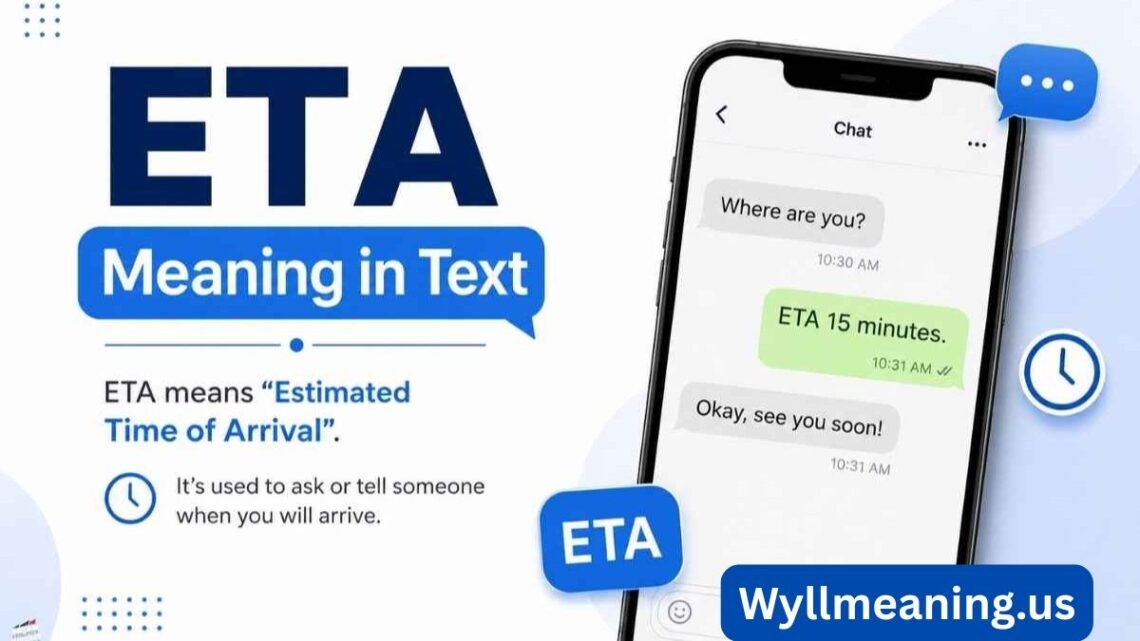
The ETA meaning in text is Estimated Time of Arrival.
People use ETA to tell someone when they expect to arrive at a location. Instead of writing a full sentence, they simply type “ETA” followed by the expected time.
For example:
- ETA: 15 minutes
- My ETA is around 6 PM.
- What’s your ETA?
It’s a quick and convenient way to share arrival times during conversations.
Why Is ETA So Popular in Text Messages?
Texting is all about saving time. Instead of typing a long explanation, abbreviations make communication faster.
ETA has become popular because it:
- Saves time
- Is easy to understand
- Works in personal and professional conversations
- Is recognized around the world
- Fits perfectly in short text messages
Today, millions of people use ETA every day without thinking twice about it.
Where Is ETA Commonly Used?
You may see ETA almost everywhere online and offline.
Personal Text Messages
Friends often ask each other when they’ll arrive.
Examples:
- “What’s your ETA?”
- “ETA 20 mins.”
- “See you soon! ETA 5 minutes.”
Family Conversations
Parents and family members often use ETA to coordinate plans.
Example:
Mom: “Dinner is ready.”
You: “ETA 10 minutes.”
Work Messages
In business communication, ETA helps coworkers plan meetings and deliveries.
Examples include:
- ETA for the report?
- What’s the ETA on the project?
- Delivery ETA is tomorrow morning.
Food Delivery Apps
Food delivery services frequently display an ETA.
For example:
- Driver ETA: 8 minutes
- Your order ETA: 30 minutes
Ride-Sharing Apps
Apps like Uber and Lyft constantly show an ETA so passengers know when their ride will arrive.
How to Use ETA Correctly in Text
Using ETA is very simple.
You can use it in several ways.
Asking Someone Their ETA
Examples:
- What’s your ETA?
- Can you send your ETA?
- ETA?
Giving Your ETA
Examples:
- ETA 15 minutes.
- My ETA is 6:30 PM.
- ETA around noon.
Updating Your ETA
Sometimes plans change.
Examples:
- Traffic is heavy. New ETA is 7 PM.
- Sorry, updated ETA: 20 minutes.
- Rain slowed me down. ETA 30 mins.
Real-Life Examples of ETA in Text Conversations
Here are some realistic conversations.
Example One
Sarah: Where are you?
Mike: ETA 10 minutes.
Example Two
Dad: Are you almost home?
Son: Yes. ETA 5 mins.
Example Three
Manager: When will the presentation be ready?
Employee: Current ETA is 3 PM.
Example Four
Friend: We’re waiting outside.
You: ETA 2 minutes!
These examples show how naturally ETA fits into everyday conversations.
Also read: What Does YK Mean?
Does ETA Always Mean Estimated Time of Arrival?
Most of the time, yes.
However, in certain industries, ETA can have different meanings.
Examples include:
- Estimated Time of Arrival
- Expected Time of Arrival
- Engineering Test Article
- Electronic Travel Authorization (travel documents)
When you’re texting someone, though, the ETA meaning in text almost always refers to Estimated Time of Arrival.
When Should You Use ETA?
ETA is useful anytime someone wants to know when you’ll arrive or finish something.
Common situations include:
- Meeting friends
- Going to work
- School pickup
- Airport pickups
- Deliveries
- Online gaming sessions
- Business meetings
- Video calls
Whenever timing matters, ETA can make communication easier.
ETA on Social Media
Social media users also use ETA frequently.
You may see posts like:
- “Concert starts soon. ETA 15 minutes!”
- “Vacation begins tomorrow. Flight ETA 4 PM.”
- “Streamer ETA 7 PM.”
On platforms like Snapchat, Instagram, Facebook, TikTok, and X (formerly Twitter), ETA usually keeps the same meaning.
Sometimes creators even update followers with an ETA for:
- Live streams
- Video uploads
- New content
- Product launches
Difference Between ETA and ETD
People sometimes confuse ETA with ETD.
Here’s an easy comparison.
| Term | Meaning | Used For |
|---|---|---|
| ETA | Estimated Time of Arrival | When someone or something arrives |
| ETD | Estimated Time of Departure | When someone or something leaves |
Example:
- Flight ETD: 8:00 AM
- Flight ETA: 11:15 AM
Remember:
Arrival = ETA
Departure = ETD
Common Mistakes People Make with ETA
Although ETA is simple, people sometimes misuse it.
Here are a few common mistakes.
Using ETA Without Context
Instead of writing:
“ETA.”
Try:
“ETA 20 minutes.”
Confusing Arrival With Departure
ETA is about arriving—not leaving.
Giving Unrealistic Times
If traffic changes, update your ETA instead of guessing.
Forgetting to Update Others
If you’re delayed, send a quick message.
Example:
“Running late. New ETA is 25 minutes.”
Similar Text Abbreviations to Know
If you’re learning texting slang, these abbreviations are also helpful.
| Abbreviation | Meaning |
|---|---|
| ETA | Estimated Time of Arrival |
| ASAP | As Soon As Possible |
| BRB | Be Right Back |
| BTW | By The Way |
| IMO | In My Opinion |
| FYI | For Your Information |
| IDK | I Don’t Know |
| TBH | To Be Honest |
| LMK | Let Me Know |
| OMW | On My Way |
Learning these abbreviations makes texting much easier.
Is ETA Formal or Informal?
One reason ETA is so popular is that it works in almost every situation.
You can use it in:
- Text messages
- WhatsApp chats
- Messenger
- Emails
- Slack
- Microsoft Teams
- Business meetings
- Customer support
- Delivery tracking
Unlike many internet slang terms, ETA is considered acceptable even in professional communication.
Tips for Using ETA Naturally
If you want your messages to sound clear and natural, keep these tips in mind:
- Give an accurate estimate.
- Update people if your timing changes.
- Keep your message short.
- Use ETA only when discussing time.
- Add extra details if needed.
For example:
“I hit traffic. ETA is now 25 minutes.”
This is more useful than simply saying you’re late.
Why Knowing the ETA Meaning in Text Is Useful
Understanding the ETA meaning in text helps you communicate better in everyday life.
Whether you’re:
- Meeting friends
- Waiting for a package
- Tracking food delivery
- Traveling
- Working remotely
- Planning events
You’ll likely see ETA regularly.
Knowing exactly what it means prevents confusion and helps conversations move more smoothly.
Frequently Asked Questions
What is the ETA meaning in text?
ETA means Estimated Time of Arrival, or the expected time someone or something will arrive.
How do you use ETA in a text message?
You can write messages like “ETA 10 minutes” or ask, “What’s your ETA?”
Is ETA only used for travel?
No. It is also used for meetings, work projects, deliveries, online events, and many other situations.
Can ETA be used in professional emails?
Yes. ETA is widely accepted in workplaces, emails, and business communication.
What is the difference between ETA and ETD?
ETA refers to arrival time, while ETD refers to departure time.
Is ETA considered internet slang?
Not exactly. It is an abbreviation that is commonly used in both casual and professional communication.
Why do delivery apps show an ETA?
They use ETA to estimate when your driver, package, or food order will arrive.
Conclusion
Understanding the ETA meaning in text makes everyday communication much easier. The abbreviation stands for Estimated Time of Arrival and is commonly used in text messages, emails, workplace chats, navigation apps, ride-sharing services, and food delivery platforms. Whether you’re telling a friend you’ll arrive in 10 minutes or checking when your package will be delivered, ETA provides a quick and clear way to share expected arrival times.
Now that you know the ETA meaning in text, you’ll be able to use it confidently in conversations, understand it whenever someone sends it, and communicate more effectively in both personal and professional situations.